
Estimated reading time: 10 minutes
Introduction: The Exciting World of Music Production
Have you ever listened to a song and thought, “I wish I could create something like that”? Well, you’re in luck! The world of music production is more accessible than ever before, and with the right guidance, you can start crafting your own tunes in no time. Whether you’re a musician looking to record your own tracks or an aspiring producer with dreams of crafting the next chart-topping hit, this guide will walk you through the essential steps of how to start producing music.
Music production is an art form that combines creativity, technical skills, and a deep understanding of sound. It’s a field that’s constantly evolving, with new technologies and techniques emerging all the time. But don’t let that intimidate you! Everyone starts somewhere, and with dedication and practice, you can develop the skills needed to bring your musical ideas to life.
In this comprehensive guide, we’ll cover everything from setting up your home recording studio to choosing the right music production software. We’ll also delve into basic music production techniques, equipment essentials, and tips for developing your unique sound. So, let’s dive in and start your journey into the world of music production!
Table of contents
- Introduction: The Exciting World of Music Production
- Understanding the Basics of Music Production
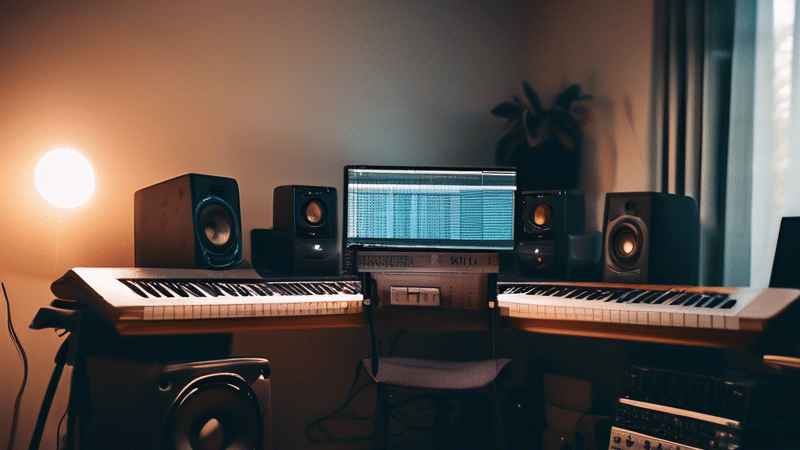
- Setting Up Your Home Recording Studio
- Choosing the Right Music Production Software
- Learning Basic Music Production Techniques
- Developing Your Music Production Skills
- Overcoming Common Challenges in Music Production
- Advanced Topics in Music Production
- Video: How to Start Producing Music with 0 Experience
- Conclusion: Your Music Production Journey Begins
- FAQs
Understanding the Basics of Music Production
Before we get into the nitty-gritty of equipment and software, it’s essential to understand what music production actually entails. At its core, music production is the process of creating, recording, and refining musical performances. It involves several stages:
- Composition: Creating the musical ideas, melodies, and harmonies.
- Arrangement: Organizing these musical elements into a cohesive structure.
- Recording: Capturing the performance of instruments and vocals.
- Editing: Refining the recorded material, fixing mistakes, and enhancing the overall sound.
- Mixing: Balancing the various elements of the recording to create a cohesive whole.
- Mastering: Finalizing the mix for distribution across different playback systems.
As a beginner, you might not tackle all these stages right away, but understanding the overall process will help you set realistic goals and expectations.
Setting Up Your Home Recording Studio
One of the most exciting aspects of modern music production is that you can create professional-sounding tracks right from the comfort of your own home. Here’s what you need to get started:
1. Choose a Suitable Space
Your first step is to find a quiet room in your home where you can set up your equipment. Ideally, this space should be:
- Free from external noise (away from busy streets or noisy appliances)
- Large enough to accommodate your equipment comfortably
- With minimal echo or reverberation (carpeted rooms are often better than those with hard floors)
2. Invest in Basic Acoustic Treatment
While professional studios spend thousands on acoustic treatment, you can start with some simple, budget-friendly options:
- Hang heavy curtains or blankets on walls to reduce reflections
- Use bookshelves filled with books to diffuse sound
- Place a rug on hard floors to reduce echo
3. Essential Equipment for Beginners
To start producing music, you’ll need some basic equipment:
- Computer: The heart of your digital studio. Any modern computer (PC or Mac) should be capable of basic music production.
- Audio Interface: This device connects your instruments and microphones to your computer. The Focusrite Scarlett series is popular among beginners.
- Microphone: For recording vocals or acoustic instruments. The Shure SM58 is a versatile and affordable option.
- Headphones: For monitoring your recordings and mixes. Look for closed-back headphones like the Sony MDR-7506.
- MIDI Controller: A keyboard-style device that allows you to play and record virtual instruments. The Akai MPK Mini is a compact and feature-rich option.
Remember, you don’t need to buy everything at once. Start with the basics and gradually expand your setup as you develop your skills and understand your needs better.

Choosing the Right Music Production Software
The software you use to create and record music is called a Digital Audio Workstation (DAW). There are many options available, each with its own strengths and learning curve. Here are some popular choices for beginners:
1. GarageBand (Mac only)
- Pros: Free, user-friendly interface, great for beginners
- Cons: Limited to Mac users, fewer advanced features
2. Ableton Live
- Pros: Versatile, great for electronic music and live performances
- Cons: Can be overwhelming for beginners, relatively expensive
3. FL Studio
- Pros: Intuitive interface, great for beat-making and electronic music
- Cons: Steeper learning curve for recording live instruments
4. Logic Pro X (Mac only)
- Pros: Professional-grade features, great for all genres
- Cons: Mac only, can be complex for beginners
5. Reaper
- Pros: Affordable, fully-featured, works on both Mac and PC
- Cons: Less intuitive interface, fewer included virtual instruments
When choosing a DAW, consider your budget, the type of music you want to create, and your computer’s operating system. Many DAWs offer free trials, so don’t hesitate to experiment with different options before making a decision.
Learning Basic Music Production Techniques
Now that you have your equipment and software set up, it’s time to start learning some basic music production techniques. Here are some fundamental skills to focus on:
1. Recording Audio
Learning to record clean, clear audio is crucial. Start by experimenting with microphone placement and gain levels. Remember, it’s always better to record at a lower volume to avoid distortion – you can always increase the volume later.
2. MIDI Programming
MIDI (Musical Instrument Digital Interface) allows you to create and edit musical performances using virtual instruments. Start by learning how to program basic drum patterns and melodies using your MIDI controller.
3. Arrangement
Understanding how to structure a song is key to creating engaging music. Study the arrangement of songs you like, noting how they introduce and develop musical ideas.
4. Basic Mixing
Mixing is the process of balancing the various elements of your track. Start by learning about volume levels, panning, and basic equalization (EQ).
5. Using Effects
Effects like reverb, delay, and compression can enhance your tracks. Start with subtle applications and gradually experiment as you become more comfortable.
Developing Your Music Production Skills
Becoming proficient in music production takes time and practice. Here are some tips to help you on your journey:
1. Learn Music Theory
While not strictly necessary, understanding basic music theory can greatly enhance your production skills. Learn about scales, chord progressions, and rhythm to create more complex and interesting music.
2. Study Your Favorite Producers
Listen closely to the work of producers you admire. Try to deconstruct their tracks, paying attention to arrangement, sound design, and mixing techniques.
3. Experiment with Different Genres
Don’t limit yourself to one style of music. Experimenting with different genres can help you discover new techniques and expand your creative palette.
4. Collaborate with Others
Working with other musicians and producers can expose you to new ideas and techniques. Join online music production communities or local meetups to connect with like-minded individuals.
5. Practice Regularly
Like any skill, music production improves with consistent practice. Try to spend some time each day working on your craft, even if it’s just for 30 minutes.

Overcoming Common Challenges in Music Production
As you start your music production journey, you’re likely to encounter some challenges. Here are some common hurdles and how to overcome them:
1. Writer’s Block
Every producer experiences creative blocks from time to time. When this happens:
- Try working on a different part of the song
- Use random generators for chord progressions or melodies
- Take a break and come back with fresh ears
2. Technical Difficulties
When faced with technical issues:
- Consult your software’s manual or online forums
- Watch tutorial videos on YouTube
- Don’t be afraid to reach out to more experienced producers for help
3. Feeling Overwhelmed
The world of music production can seem vast and complex. To avoid feeling overwhelmed:
- Focus on one skill at a time
- Set small, achievable goals
- Remember that even professional producers are constantly learning
4. Comparing Yourself to Others
It’s easy to feel discouraged when comparing your work to professional productions. Remember:
- Everyone starts as a beginner
- Focus on your own progress rather than comparing yourself to others
- Professional tracks often involve teams of specialists and expensive equipment
Advanced Topics in Music Production
As you become more comfortable with the basics, you might want to explore some more advanced topics:
1. Sound Design
Creating unique sounds can set your productions apart. Experiment with synthesizers and audio manipulation techniques to craft original sounds.
2. Advanced Mixing Techniques
Learn about more complex mixing tools like multiband compression, sidechain compression, and mid-side processing.
3. Mastering
While many beginners send their tracks to professional mastering engineers, learning the basics of mastering can help you understand how to achieve a polished, professional sound.
4. Music Business
If you’re interested in turning your hobby into a career, start learning about music licensing, copyright laws, and the various roles within the music industry.
Video: How to Start Producing Music with 0 Experience
Conclusion: Your Music Production Journey Begins
Starting your journey in music production can feel daunting, but remember that every professional producer was once a beginner. With patience, dedication, and a willingness to learn, you can develop the skills needed to bring your musical ideas to life.
As you embark on this exciting journey, keep these key points in mind:
- Start with the basics: Set up a simple home studio and learn your chosen DAW inside out.
- Practice regularly: Consistency is key in developing your skills.
- Don’t be afraid to experiment: Some of the most innovative music comes from breaking the rules.
- Learn from others: Whether through online tutorials, collaborations, or music production communities, never stop learning.
- Enjoy the process: Music production should be fun! Don’t lose sight of the joy that creating music brings you.
Remember, there’s no one “right” way to produce music. As you develop your skills, you’ll find your own unique workflow and style. Embrace this individuality – it’s what will make your music stand out.
So, what are you waiting for? Fire up your DAW, put on your headphones, and start creating. Your first track awaits, and who knows? It might just be the beginning of an exciting career in music production. Happy producing!
Related Posts
FAQs
Music production involves creating, recording, editing, mixing, and mastering musical ideas, transforming simple concepts into polished tracks.
You’ll need a computer, audio interface, microphone, headphones, MIDI controller, and a Digital Audio Workstation (DAW) like GarageBand, Ableton Live, FL Studio, Logic Pro X, or Reaper.
Consider your budget, computer’s operating system, and the type of music you want to create. Free trials can help you experiment before making a decision.
Focus on recording clean audio, programming MIDI, arranging song structure, basic mixing, and using effects like reverb and delay to enhance your tracks.
Set small, achievable goals, experiment with different approaches, consult tutorials or forums, take breaks when needed, and seek feedback from other producers.