

Estimated reading time: 18 minutes
Have you ever found yourself at a party, the pulsating beats of dubstep filling the air, but feeling completely lost on how to move your body? You’re not alone! Dubstep dancing can seem like a mysterious art form, with its robotic movements and seemingly impossible contortions. But fear not, because mastering the art of dubstep dance is not as daunting as it appears!
Imagine being able to effortlessly glide across the dance floor, your body perfectly synced with the intense drops and wobbling basslines. Picture yourself captivating onlookers with your slow-motion moves and seamless isolations. With the right guidance, you can transform from a wallflower to the life of the party in no time!
In this comprehensive guide, we’ll break down the essentials of dubstep dance, from the basics of what it is to advanced techniques like spinning on your toe and mastering the infamous “drop.” Whether you’re a complete beginner or looking to level up your skills, we’ve got you covered. Get ready to dive into the electrifying world of dubstep dance and unleash your inner robot!
Table of contents
- What is Dubstep Dance
- Learning All the Dubstep Dance Moves
- How to Move In Slow Motion
- How to Spin on Your Toe
- How to Dubstep Dance: Magnet Concept
- Dubstep Dance Isolations
- Dubstep Dance Arm Waves
- Dancing to Dubstep Music
- Dubstep Dance Mastering the Drop
- Dancing to the Drop in Dubstep Music
- How to Hit or Pop Dance Move
- Advance Arm Waving Dance Moves
- Learning Dubstep Dance For Beginners
- Video: How To Dance to DUBSTEP Tutorial | Robotic POPPING Lesson
- Conclusion
- FAQs
What is Dubstep Dance
Origins of Dubstep Dance
Dubstep dance, also known as “riddim” dance, emerged alongside the dubstep music genre in the early 2000s. It combines elements of various dance styles, including popping, waving, and gliding, to create a unique and visually striking form of movement.
Characteristics of Dubstep Dance
Dubstep dance is characterized by:
- Robotic movements
- Intense isolations
- Slow-motion effects
- Sudden, sharp transitions
These elements work together to create a dance style that perfectly complements the heavy bass drops and syncopated rhythms of dubstep music.
Dubstep Dance vs. Traditional Dance Styles
| Aspect | Dubstep Dance | Traditional Dance Styles |
|---|---|---|
| Tempo | Variable, often slow | Usually consistent |
| Movement | Robotic, choppy | Fluid, continuous |
| Music | Electronic, bass-heavy | Various genres |
| Expression | Abstract, futuristic | Emotional, narrative |
Influence on Pop Culture
Dubstep dance has gained significant popularity through:
- Music videos
- Dance competitions
- Social media platforms
- Street performances
Its unique visual appeal has made it a favorite among dancers and audiences alike, contributing to the broader dubstep culture and influencing other dance styles in the process.
Learning All the Dubstep Dance Moves

Basic Dubstep Moves
To start your dubstep dance journey, it’s essential to master the basic moves. Here are some fundamental techniques:
- The Robot
- Popping
- Arm Waves
- Gliding
These moves form the foundation of dubstep dancing and can be combined to create more complex routines.
Intermediate Techniques
Once you’ve mastered the basics, you can move on to more advanced moves:
- Tutting
- Isolations
- Slow-motion effects
- Liquid dancing
These techniques require more control and practice but will significantly enhance your dubstep performance.
Advanced Combinations
For experienced dancers, combining different moves creates a unique and impressive routine:
| Move Combination | Difficulty Level | Visual Impact |
|---|---|---|
| Robot + Popping | Intermediate | High |
| Arm Waves + Tutting | Advanced | Very High |
| Gliding + Isolations | Expert | Exceptional |
Practice these combinations to elevate your dubstep dance skills to the next level.
Incorporating Music
To truly dance to dubstep, you must sync your moves with the music:
- Listen for the bass drops
- Match your movements to the tempo
- Emphasize robotic moves during electronic sections
- Use fluid motions during melodic parts
By learning these moves and techniques, you’ll be well on your way to mastering dubstep dance. Next, we’ll explore how to create the illusion of moving in slow motion, a key element in dubstep dancing.
How to Move In Slow Motion

Mastering Slow Motion Movements
Understanding the Concept
Slow motion in dubstep dancing creates a mesmerizing visual effect that contrasts beautifully with the fast-paced music. To execute this move effectively:
- Visualize moving through a thick, resistant medium
- Focus on controlled, fluid movements
- Maintain constant tension in your muscles
- Practice isolating different body parts
Techniques for Slow Motion Dancing
- Start with simple movements and gradually increase complexity
- Use your breath to help control the pace of your movements
- Experiment with different speeds within the same sequence
| Body Part | Slow Motion Technique |
|---|---|
| Arms | Fluid, wave-like motions |
| Legs | Controlled, smooth steps |
| Torso | Subtle, gradual shifts |
| Head | Deliberate, measured turns |
Incorporating Slow Motion into Your Routine
Slow motion moves can be seamlessly integrated into your dubstep dance routine:
- Use as a contrast to fast, sharp movements
- Incorporate during breakdowns or build-ups in the music
- Combine with other techniques like popping or waving
Practice these slow motion techniques regularly to improve your control and fluidity. As you master this skill, you’ll be able to create stunning visual effects that perfectly complement the unique rhythm and energy of dubstep music. Next, we’ll explore another essential dubstep dance move: spinning on your toe.
How to Spin on Your Toe
Preparation
Before attempting to spin on your toe, ensure you’re wearing appropriate footwear with a smooth sole. Start by practicing on a smooth, non-slip surface. Warm up your ankles and feet to prevent injury.
Technique
- Begin in a standing position with your weight on the ball of your spinning foot.
- Shift your weight onto the toe of that foot.
- Use your other foot to give a slight push and initiate the spin.
- Keep your body straight and arms close to your sides for balance.
- Spot a fixed point with your eyes to maintain orientation.
Practice Progression
| Stage | Focus | Duration |
|---|---|---|
| 1 | Balance on toe | 1-2 weeks |
| 2 | Quarter turns | 1-2 weeks |
| 3 | Half turns | 2-3 weeks |
| 4 | Full turns | 3-4 weeks |
Tips for Improvement
- Start with slow, controlled movements
- Gradually increase speed as you gain confidence
- Practice regularly, aiming for at least 15 minutes daily
- Record yourself to analyze and improve your technique
Incorporating into Dubstep
Once mastered, integrate toe spins into your dubstep routine:
- Use during slower beats to create contrast
- Combine with arm waves for a fluid effect
- Transition from a toe spin into a pop or hit move
Remember, perfecting the toe spin takes time and patience. As you progress, you’ll find it adds a dynamic element to your dubstep dance repertoire. Next, we’ll explore the magnet concept in dubstep dancing, which can be seamlessly combined with your newly acquired toe spin technique.
How to Dubstep Dance: Magnet Concept

Understanding the Magnet Concept
The magnet concept is a fundamental principle in dubstep dancing that helps dancers create fluid and controlled movements. This technique involves imagining that different parts of your body are magnets, either attracting or repelling each other.
Applying the Magnet Concept
To apply the magnet concept in your dubstep dancing:
- Visualize magnetic fields
- Practice with different body parts
- Combine with other dubstep techniques
- Experiment with attraction and repulsion
Here’s a breakdown of how to use the magnet concept with different body parts:
| Body Part | Magnet Application |
|---|---|
| Hands | Attract/repel each other or objects |
| Elbows | Pull towards or push away from torso |
| Head | Draw towards or away from shoulders |
| Feet | Slide along the floor or lift with resistance |
Incorporating Magnet Concept into Routines
Start by practicing simple movements, such as slowly bringing your hands together as if they’re magnetic. As you become more comfortable, incorporate the concept into more complex dubstep moves like arm waves or isolations. Remember to maintain control and precision throughout your movements, as if you’re genuinely manipulating magnetic forces with your body.
Now that you’ve grasped the magnet concept, you’ll be able to add a new level of control and fluidity to your dubstep dance moves. This technique serves as a foundation for many advanced dubstep dance isolations, which we’ll explore in the next section.
Dubstep Dance Isolations
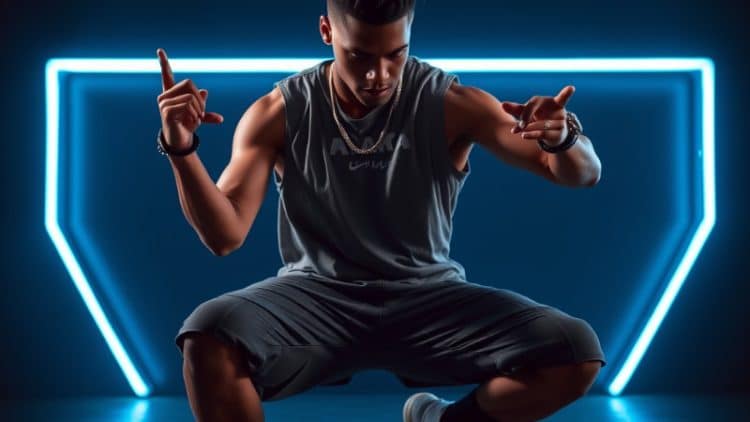
Body Isolations
Body isolations are a fundamental aspect of dubstep dancing. These movements involve moving one part of your body while keeping the rest still, creating a robotic or mechanical effect. Here’s a breakdown of key isolation techniques:
- Head Isolations
- Shoulder Isolations
- Chest Isolations
- Hip Isolations
Practicing Isolations
To master isolations, follow these steps:
- Start with slow, controlled movements
- Focus on one body part at a time
- Gradually increase speed and complexity
- Practice in front of a mirror
| Body Part | Beginner Move | Advanced Move |
|---|---|---|
| Head | Side-to-side | Figure 8 |
| Shoulders | Up and down | Rolling |
| Chest | Forward/back | Circles |
| Hips | Side-to-side | Figure 8 |
Combining Isolations
Once you’ve mastered individual isolations, try combining them for more complex movements. For example:
- Head isolation + shoulder roll
- Chest pop + hip slide
- Shoulder shrug + head tilt
Remember, precision is key in dubstep dance isolations. Start slow and build up speed as you become more comfortable with each movement. With practice, you’ll be able to seamlessly incorporate these isolations into your dubstep dance routines, adding depth and intrigue to your performance.
Dubstep Dance Arm Waves

Basic Arm Wave Technique
The arm wave is a fundamental move in dubstep dancing. To execute this move:
- Start with your arms straight out in front of you
- Begin the wave motion from your shoulder
- Move through your elbow, wrist, and fingertips
- Repeat the motion in a fluid, continuous manner
Types of Arm Waves
| Wave Type | Description | Difficulty Level |
|---|---|---|
| Vertical | Up and down motion | Beginner |
| Horizontal | Side to side motion | Intermediate |
| Circular | Rotating motion | Advanced |
Adding Variations
To make your arm waves more interesting:
- Alternate between fast and slow speeds
- Combine different wave types
- Incorporate isolations (freezing parts of your arm)
- Use both arms simultaneously or alternately
Integrating Arm Waves with Other Moves
Arm waves can be seamlessly combined with other dubstep dance moves:
- Transition from arm waves to robot-like movements
- Use arm waves as a bridge between popping and locking sequences
- Incorporate arm waves into your footwork
Practice these techniques regularly to master arm waves and elevate your dubstep dance performance. As you become more comfortable with arm waves, you’ll naturally find ways to incorporate them into your overall dance routine, adding fluidity and visual interest to your movements.
Dancing to Dubstep Music

Understanding Dubstep Music Structure
Dubstep music has a unique structure that dancers need to understand to synchronize their movements effectively. The typical dubstep track consists of:
- Intro
- Build-up
- Drop
- Breakdown
- Second build-up
- Second drop
Recognizing these elements is crucial for timing your moves correctly and creating an impressive performance.
Matching Moves to Music Elements
To dance effectively to dubstep, it’s essential to match your moves to different parts of the track:
| Music Element | Dance Style |
|---|---|
| Intro | Subtle, controlled movements |
| Build-up | Increasing intensity and speed |
| Drop | Explosive, high-energy moves |
| Breakdown | Slower, fluid motions |
Utilizing the Beat
Dubstep typically has a tempo of around 140 BPM (beats per minute). To stay on beat:
- Count in your head: “1, 2, 3, 4”
- Feel the “wobble” bass and sync your movements
- Use the snare drum hits as cues for sharp movements
Improvisation and Freestyle
While having a repertoire of set moves is important, don’t be afraid to improvise:
- Experiment with different combinations of moves
- React to unexpected elements in the music
- Let the energy of the track guide your movements
Now that you understand how to dance to dubstep music, let’s explore the crucial skill of mastering the drop in dubstep dance.
Dubstep Dance Mastering the Drop

Understanding the Drop
The drop is a crucial element in dubstep music and dance. It’s characterized by a sudden, intense change in rhythm and bass, often accompanied by a brief pause or build-up. To master the drop in dubstep dance, you need to:
- Anticipate the drop
- Prepare your body
- Execute powerful movements
- Sync with the music
Preparing for the Drop
Before the drop hits, it’s essential to:
- Listen carefully to the music
- Identify pre-drop cues
- Position your body
- Build tension in your muscles
Executing the Drop
When the drop hits, unleash your energy with:
- Sharp, explosive movements
- Exaggerated gestures
- Intense facial expressions
- Rapid changes in body position
Techniques for Mastering the Drop
| Technique | Description | Effect |
|---|---|---|
| Robot Freeze | Sudden stop in robotic pose | Creates visual impact |
| Bass Bounce | Rapid up-and-down body movement | Syncs with heavy bass |
| Arm Wave Explosion | Quick, expansive arm movements | Emphasizes the drop’s intensity |
| Floor Drop | Dramatic fall to the ground | Surprises the audience |
Practice Exercises
To improve your drop mastery:
- Practice timing with various dubstep tracks
- Record yourself and analyze your movements
- Experiment with different drop styles
- Incorporate other dubstep moves into your drop sequence
By focusing on these aspects, you’ll be well on your way to mastering the drop in dubstep dance. Remember, the key is to feel the music and let it guide your movements. With practice, you’ll develop your unique style of expressing the drop through dance.
Dancing to the Drop in Dubstep Music

Understanding the Drop
The drop is a crucial element in dubstep music, characterized by a sudden change in rhythm and bass intensity. To dance effectively to the drop, you need to:
- Anticipate the build-up
- Prepare your body for explosive movements
- Synchronize your moves with the bass
Techniques for Dancing to the Drop
Energy Release
When the drop hits, unleash your energy through:
- Explosive arm movements
- Quick footwork
- Body isolations
Incorporating Signature Dubstep Moves
During the drop, integrate these popular dubstep dance moves:
| Move | Description |
|---|---|
| Robot | Sharp, mechanical movements |
| Glitch | Quick, jerky motions |
| Liquid | Fluid, wave-like movements |
Adapting to Different Drop Styles
Dubstep drops can vary in intensity and style. Here’s how to adapt:
- Heavy bass drops: Focus on powerful, grounded movements
- Melodic drops: Incorporate more fluid, expressive motions
- Glitch drops: Emphasize quick, staccato movements
Remember, the key to dancing to the drop is feeling the music and letting your body respond naturally. Practice these techniques, and you’ll soon be able to confidently express yourself during the most intense moments of dubstep tracks.
How to Hit or Pop Dance Move

The Hit or Pop Move
The hit or pop move is a fundamental element of dubstep dance, characterized by sharp, sudden movements that synchronize with the music’s intense beats. This dance move creates an illusion of the dancer being hit by an invisible force or popping like a bubble.
Mastering the Basic Hit
- Start with a relaxed stance
- Choose a body part to “hit” (e.g., shoulder, chest, or hip)
- Tense the chosen muscle group suddenly
- Release the tension immediately
- Return to the relaxed position
Incorporating Hits into Your Routine
- Single hits: Perform one hit at a time, matching specific beats in the music
- Double hits: Execute two quick hits in succession
- Combination hits: Incorporate hits with other dubstep moves like waves or isolations
Hit Variations
| Variation | Description | Difficulty Level |
|---|---|---|
| Chest pop | Sudden expansion and contraction of the chest | Beginner |
| Shoulder hit | Quick upward movement of one or both shoulders | Intermediate |
| Hip pop | Sharp outward movement of the hip | Intermediate |
| Full-body hit | Coordinated hit involving multiple body parts | Advanced |
To enhance your hit or pop moves, practice in front of a mirror to refine your technique. Start with slow, exaggerated movements and gradually increase speed as you become more comfortable. Remember, the key to a compelling hit or pop is the contrast between tension and relaxation, creating a visually striking effect that captures the essence of dubstep dance.
Now that you’ve mastered the hit or pop move, let’s explore how to incorporate advanced arm waving techniques into your dubstep dance routine.
Advance Arm Waving Dance Moves

Mastering Advanced Arm Waving Techniques
Complex Wave Patterns
Advanced arm waving in dubstep dancing involves creating intricate patterns that flow seamlessly with the music. Here are some advanced techniques to elevate your arm waves:
- Multi-directional waves
- Staggered waves
- Accelerating and decelerating waves
- Combination waves (e.g., figure-eight patterns)
Incorporating Isolations
To add depth to your arm waves, combine them with isolations:
| Isolation Technique | Description |
|---|---|
| Popping | Quick, sharp contractions of muscles |
| Locking | Sudden pauses in movement |
| Ticking | Small, precise movements |
Layering with Body Movements
Take your arm waves to the next level by synchronizing them with other body parts:
- Chest waves
- Leg waves
- Full-body undulations
Remember, practice is key to mastering these advanced techniques. Start slowly and gradually increase your speed and complexity as you become more comfortable with the movements. Experiment with different combinations and transitions to develop your unique style within the dubstep dance framework.
Learning Dubstep Dance For Beginners

Start with Basic Moves
For beginners, it’s crucial to start with foundational dubstep dance moves. Focus on:
- The Robot
- The Wave
- Popping
These basic moves form the building blocks of more complex dubstep choreography.
Practice Isolations
Isolations are a key component of dubstep dancing. Begin with:
- Head isolations
- Shoulder isolations
- Chest isolations
Practice these individually before combining them into fluid sequences.
Develop Body Control
Body control is essential for dubstep dancing. Try these exercises:
- Slow-motion movements
- Freezes and holds
- Quick, sharp transitions
| Exercise | Purpose | Difficulty |
|---|---|---|
| Slow-motion | Improves control | Easy |
| Freezes | Enhances balance | Medium |
| Quick transitions | Builds agility | Hard |
Learn to Feel the Beat
Understanding dubstep music is crucial. Practice:
- Identifying the drop
- Moving to different tempos
- Syncing movements with bass lines
Combine Moves and Experiment
As you progress, start combining basic moves and adding your own flair. Remember, dubstep dance is about personal expression and creativity. Don’t be afraid to experiment and develop your unique style.

Mastering the art of dancing to dubstep requires dedication, practice, and a willingness to explore various techniques. From understanding the basics of dubstep dance to perfecting advanced moves like slow-motion movements, toe spins, and arm waves, each element contributes to creating a captivating performance. The key is to internalize the rhythm, embrace the unique style of dubstep, and allow your body to express the music’s intensity through isolations, pops, and fluid transitions.
Remember, dubstep dance is all about creativity and individual expression. As you continue to practice and refine your skills, don’t be afraid to experiment with your own combinations and interpretations. Whether you’re a beginner or looking to advance your techniques, the journey of learning dubstep dance is an exciting one that will push your limits and help you discover new ways to move your body. So, put on your favorite dubstep track, feel the beat, and let your body flow with the music!
Video: How To Dance to DUBSTEP Tutorial | Robotic POPPING Lesson
Conclusion
In conclusion, mastering dubstep dance is all about blending robotic precision with fluid motion, allowing you to match the intense basslines and dynamic rhythms of dubstep music. Whether you’re just starting or aiming to refine your skills, the key is practice, creativity, and staying in sync with the music. From basic moves like arm waves and popping to advanced techniques such as slow-motion effects and isolations, each step brings you closer to becoming a captivating dancer on the floor. So, turn up the music, embrace the beat, and let your body flow with the electrifying energy of dubstep!
Related Posts
FAQs
Dubstep dance is a unique style that emerged alongside dubstep music, combining robotic movements, sharp isolations, slow-motion effects, and fluid transitions. It’s characterized by syncing movements with the heavy bass and syncopated rhythms of dubstep tracks, creating a captivating and energetic performance.
No, you don’t need prior dance experience to start learning dubstep. Begin with the basic moves like arm waves and popping, and progress to more advanced techniques as you practice. With dedication and practice, anyone can master dubstep, regardless of their dance background.
To incorporate slow-motion into your dubstep routine, focus on controlled, fluid movements, using constant muscle tension. Start with basic moves and gradually increase complexity. Slow-motion works best when used to contrast fast, sharp movements, emphasizing key moments in the music like breakdowns or drops.
Essential moves for beginners include the robot, popping, arm waves, and gliding. These foundational moves can be combined to create more complex routines. Once mastered, you can progress to intermediate and advanced techniques like tutting, isolations, and slow-motion effects to elevate your performance.
To improve your dubstep technique, practice regularly, focusing on precision and control. Use a mirror to check your form, record your routines for self-evaluation, and listen closely to the music’s tempo and rhythm to match your movements. Gradually increase the speed and complexity of your moves as you build confidence.